God will help you to fight – Part Two, #godindailylife, #thebibleindailylife

In Part One we examined some Biblical passages and truths that will encourage us when we face trials as we seek to grow in our relationship with Jesus. We examined some Biblical principles found in the first two stanzas of “God Helps You to Fight”, given below.

When you make a new effort to walk in the light
be not surprised when the enemy fights.
Don’t grumble inside!  Don’t say in your heart
“It should just be all easy when I make a new start!
Why God, He should make this new thing a breeze
for He is the one I’m trying to please!”

            But be not discouraged!
. . . for that hater of humans is not authorized
to enter the soul where Jesus is prized,
for God, full of mercy, completely surrounds
the soul that will trust Him and grace does abound!

Though ‘round your frail heart the storm it may roar
the fear you feel now you’ll feel nevermore
if you will just stand and learn how to fight
by leaning on God with all of your might
by saying to God: “I’ll walk in Your light.
I’ll stand in Your peace for Yours is this fight.”  

In this blog post, we will look at Biblical principles underlying Stanza Three.

big waves crashing on lighthouse during daytime

Photo by Marcus Woodbridge on Unsplash

What is fear?  Read the definition of fear given below. Do you see that fear comes when we worry about what has not yet happened? Webster’s 1828 online dictionary defines fear as:

A painful emotion or passion excited by an expectation of evil, or the apprehension of impending danger. Fear expresses less apprehension than dread, and dread less than terror and fright. The force of this passion, beginning with the most moderate degree, may be thus expressed, fear dread, terror, fright. Fear is accompanied with a desire to avoid or ward off the expected evil. Fear is an uneasiness of mind, upon the thought of future evil likely to befall us. (emphasis added.)

In His Word, God tells us not to fear over and over and over. Why? One reason is that He knows fear is a powerful weapon the enemy uses to “steal, kill and destroy” (John 10:10, KJV). The enemy always strives to harm us, rob us of the truth and ultimately aims to destroy us.  We can learn to conquer fear in whatever form it comes by following examples in the Bible.

Consider Jehoshaphat’s Example. King Jehoshaphat gave us a pattern to follow when he defeated the vast army of Ammon, Moab and Mount Sier.

[1]        Be in right-standing with God.

[2]        Pray for your situation – with humility about yourself and confidence in God.

[3]        Do not flee, rather face the situation and move forward.

[4]        Set your mind to trust and keep it set on trusting.

[5]        Take time to thank and praise God for the victories He gives you. In this way you will imprint them on your heart so that your memories of victory will speak to you in the future.

Stop now and read 2 Chronicles 20:1-30. Can you find the five steps listed above in the story? Here they are as I see them.

[1]       Be in right-standing with God. King Jehoshaphat was in right standing with God. 2 Chronicles 17:3 tells us “The LORD was with Jehoshaphat because in his early years he walked in the ways his father David had followed.” (NIV) We must all confess our sins quickly and maintain a right relationship with God. We must try our utmost to live in habitual fellowship with God, living in “conformity with His will in word, thought, and action.” (Deuteronomy 6:25, AMPC)

Staying in right standing with God is essential whether we are in an easy season or a season of challenges. As you study your Bible, notice how often God talks about righteousness. Notice how often His promises are linked to righteousness. One example is John 9:31: “Now we know that God does not hear sinners; but if anyone is a worshiper of God and does His will, He hears him.” (KJV).  See also Proverbs 15:29.

[2] Pray for your situation – with humility about yourself and confidence about God.

When a vast army threatened King Jehoshaphat, he “resolved to inquire of the LORD, and he proclaimed a fast for all of Judah” (v 3).  People responded from every town in the kingdom. It was a whole-hearted response, as our response must be when we seek God.

In front of the whole assembly, Jehoshaphat acclaimed God’s supreme power, described the specific situation, acknowledged his own helplessness and asked for God’s help. His concluding words were “O our God, will you not judge them? For we have no power to face this vast army that is attacking us. We do not know what to do, but our eyes are upon You.” (v. 12, emphasis added)

NOTICE THIS: The Bible says that right after Jehoshaphat prayed, the Lord reassured His frightened people. Speaking through the prophet Jahazel, the Lord comforted and reassured His desperate people. He said:

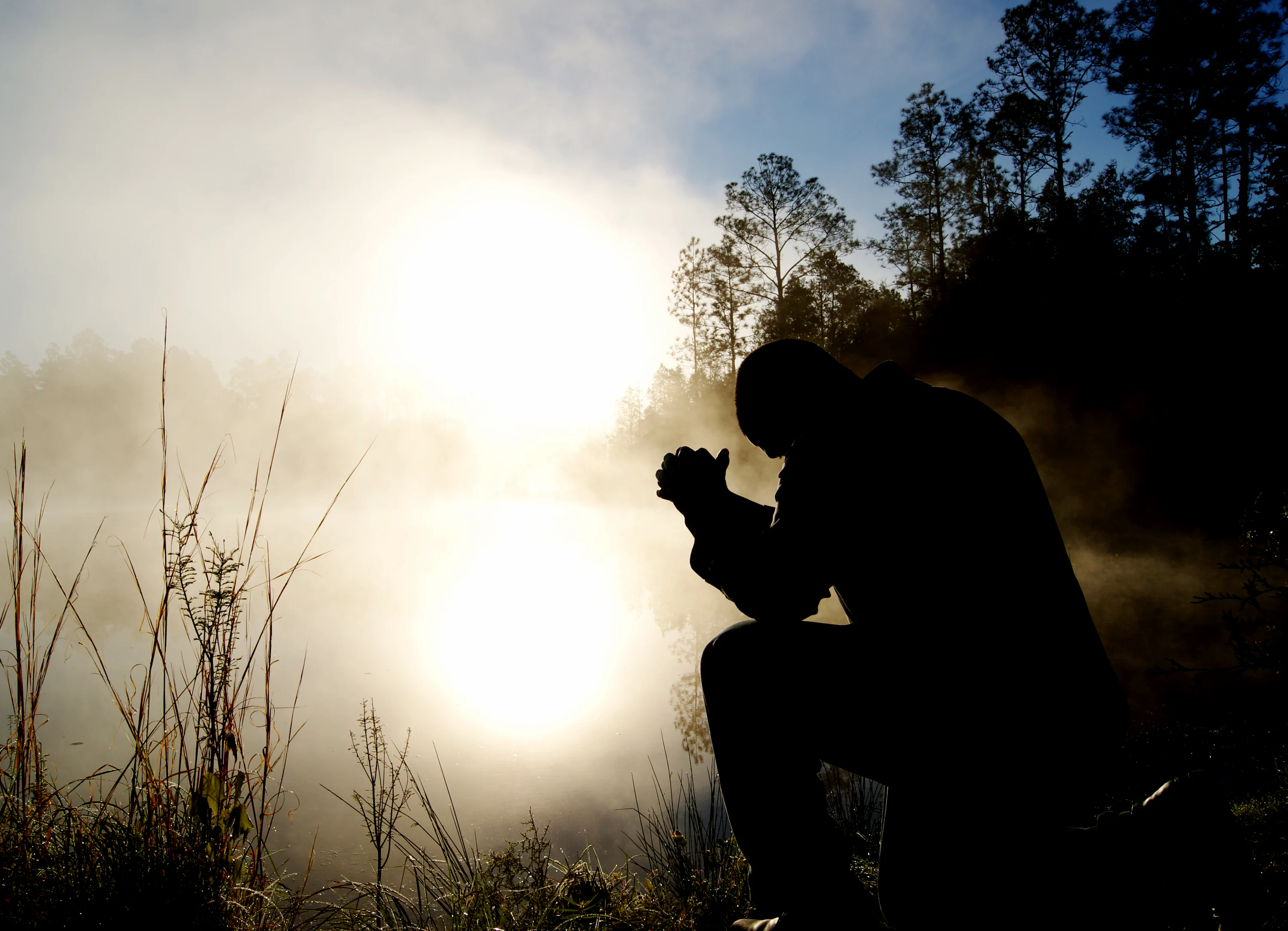
silhouette of kneeling man

Photo by Aaron Burden on Unsplash

Do not be afraid or discouraged because of this vast army. For the battle is not yours, but God’s.  Tomorrow march down against them. . . You will not have to fight this battle. Take up your positions; stand firm and see the deliverance the LORD will give you. O Judah and Jerusalem. Do not be afraid; do not be discouraged. Go out to face them tomorrow, and the LORD will be with you.” (v.15-17).

Appropriately, Jehoshaphat immediately bowed before the Lord and all the people worshipped and praised the Lord “with very loud voice.”

[3]       Do not flee, rather face the situation and move forward. Then King Jehoshaphat led his army to the battle.  Go back and reread the definition of fear. Notice that fear can grow into dread then terror and fright. The more we yield to fear, the more it controls us. If we stay in the feeling of fear, we will start dreading then avoiding that thing we fear. Eventually, the mere thought of it brings terror and makes us do senseless things. When we feel terror, we take hasty, unwise actions or seek to numb the feelings through alcohol, drugs, overwork, hours of mindless entertainment, etc.

By thus fleeing the situation emotionally, we do not operate from the sound mind God gives us. “For God has not given us a spirit of fear, but of power and of love and of a sound mind.” (2 Timothy 1:7, NKJV) Other translations render that last word “self-discipline.”

When we are in the right state of mind–when we have not fled the scene emotionally by panicking–God can give us courage and self-control for whatever we face. Jehoshaphat kept trusting God and in his trusting God he found power to act with courage and also to impart that courage to others.

Early the next morning after his prayer of dedication, Jehoshaphat led his people toward the battle. He encouraged them by saying “have faith in the LORD your God and you will be upheld; have faith in His prophets and you will be successful.” (v. 20).

[4]       Set your mind to trust and keep it set on trusting. After Jehoshaphat encouraged his people to have faith in God, he “appointed men to sing to the Lord and to praise Him for the splendor of His holiness as they went out at the head of the army, saying: “Give thanks to the Lord, for his love endures forever.” (v. 21)

This was trusting God with confidence and showing it! And look at what God did.

As soon as the praising and singing began, God caused their enemies to turn on each other. Soon, that vast army was “only dead bodies on the ground.” So vast was the army that it took three days to pick up the plunder!

[5]       Take time to thank and praise God for the victories He gives you. After the battle, the people assembled there in the valley of Beracah (which means praise) and praised God. Then they returned home and went to the temple to continue praising and celebrating God “with harps and lutes and trumpets.”

God’s desire is for us to live in peace and to prosper. The only fear God wants us to have is the fear, meaning reverence and respect, for Him. God wants us to live in peace. Ponder John 14:27, John 16:33, Philippians 4:7, and Isaiah 26:3.

When God helps us conquer one fear, we are better equipped to conquer other fears. God longs to train us and give us power to use the spiritual weapons He has provided. He wants us to live a victorious life. So, God trains us by letting us see the negative results when we break His laws and the positive results when we follow them.

For example, one of God’s instructions or laws is His promise in Isaiah 26:3 “You will keep him in perfect peace, Whose mind is stayed on You, because he trusts in You.” (NKJV, emphasis added) When I’m in a fear-inducing situation, if I follow this guidance and keep my mind fixed on God and the truths in His Word, I have His peace. When I panic and let my mind run wild with fear, I have no peace. God thus instructs me through, by means of, His laws.

In the same way, a toddler learns how the law of gravity works when he drops a cookie from his high chair tray and the cookie hits the floor, out of his reach. By letting us experience the natural consequences of our actions, God teaches us. We are greatly blessed when God trains us how to keep ourselves calm in trials and wait on God to act.

Blessed (happy, fortunate, to be envied) is the man whom You discipline and instruct, O Lord, and teach out of Your law, that You may give him power to keep himself calm in the days of adversity, until the [inevitable] pit of corruption is dug for the wicked (Psalm 94:12, AMPC)

God longs to take away our fears. He has done that countless times for me and many friends I know. One instance for which I am especially grateful occurred when I was a new believer.

At that time, I consistently arrived at church just before Sunday School began. Quiet and reserved by nature and at that time also painfully shy, the unstructured minutes before the lesson started brought painful self-consciousness and a frightened mind unable to think much less to  make small talk. One day, however, after studying about trusting God and, weary of the shyness and resulting isolation, I decided to trust God and arrive five minutes early. A friendly outgoing lady, who became a close friend, sat next to me. God helped the conversation flow easily.

Month by month, year by year, as I continued facing social situations in God’s strength instead of avoiding them, God helped me improve my social skills. With His help, I learned to make small talk even with strangers, to lead small groups, and to make presentations when I was in school and later in work. God knew that, had I remained in isolation, my spirit would be as a stunted, unfruitful tree. So, when I tried to do something new for God, He helped.

Yes, it was hard at first. Sometimes people did not respond well to my timid overtures. I drove home in tears many a Sunday. But, by great grace, I persisted and God eventually developed self-control that empowers me to engage comfortably in social situations that are such an essential component of spiritual health.

It began because a thoroughly ordinary believer tried to grow spiritually and trusted God about a situation where defeat seemed certain, where initial fear had turned into life-crippling terror. Dear friend, that is what I earnestly pray becomes your story with whatever stands in the way of your spiritual progress and prosperity.

a group of people sitting around a white table

{Photo by Priscilla Dupreez on Unsplash

God will help you to fight – Part One of Two -#godindailylife, #thebibleindailylife

grayscale photo of trees and pathway

Photo by Simon on Unsplash

When you make a new effort to walk in the light
be not surprised when the enemy fights.
Don’t grumble inside!  Don’t say in your heart
“It should just be all easy when I make a new start!
Why God, He should make this new thing a breeze
for He is the one I’m trying to please!”

            But be not discouraged!
. . . for that hater of humans is not authorized
to enter the soul where Jesus is prized,
for God, full of mercy, completely surrounds
the soul that will trust Him and grace does abound!

Though ‘round your frail heart the storm it may roar
the fear you feel now you’ll feel nevermore
if you will just stand and learn how to fight
by leaning on God with all of your might
by saying to God: “I’ll walk in Your light.
I’ll stand in Your peace for Yours is this fight.” 

Part One: You likely know that when you make new efforts to walk close to Jesus, Satan seeks to lure you into dark paths of discouragement, fear, doubt, temptation, and deceit. I pray you also know that “He holds success in store for the upright, He is a shield to those whose walk is blameless.” (Proverbs 2:7, NIV). I pray, too, that you know “You need to persevere so that when you have done the will of God, you will receive what He has promised.” (Hebrews 10:36, NIV).

Last week, after talking about spiritual growth with a cherished friend, the little poem printed above bubbled up. As I rearranged words to fit the meter, underlying Bible principles also bubbled up. Reflections on those principles follow each stanza below.

Stanza One:

 When you make a new effort to walk in the light
be not surprised when the enemy fights.
Don’t grumble inside!  Don’t say in your heart
“It should just be all easy when I make a new start
Why God, He should make this new thing a breeze
for He is the one I’m trying to please!”

Consider the temptations of Jesus. Fellow believer, think about Matthew 4:1-11. Just as Jesus was about to begin His ministry, the Lord led him into the desert where Satan tempted Jesus mightily. Our human tendency is to think God should make it easy when we try hard to please Him. That is being unrealistic. Jesus told His followers in John 16:33: “I have told you all this so that you may have peace in me. Here on earth you will have many trials and sorrows. But take heart, because I have overcome the world.” (NLT). The AMPC further clarifies that last phrase like this: “For I have overcome the world.   [I have deprived it of power to harm you and have conquered it for you.]

God warns us in 1 Peter 5:8:

“Be well balanced (temperate, sober of mind), be vigilant and cautious at all times; for that enemy of yours, the devil, roams around like a lion roaring [in fierce hunger], seeking someone to seize upon and devour.” (AMPC) 

Just as Jesus faced trials, so will we. “A disciple is not above his teacher, nor a slave above his master.” (Matthew 10:24, NASB). However!!  Just as Jesus overcame temptations with the Word (Matthew 4:1-11), so can we. We can remind ourselves that trials and temptations help us grow, as James 1:2-4 tells us.

“ Dear brothers and sisters, when troubles of any kind come your way, consider it an opportunity for great joy. For you know that when your faith is tested, your endurance has a chance to grow. So let it grow, for when your endurance is fully developed, you will be perfect and complete, needing nothing.” (James 1:2-4, NLT, emphasis added).

How does a runner develop endurance? By repeated exercise, forcing his lungs to work hard mile after mile, day after day. It is not easy but the brief discomfort brings long-lasting gain.

Consider the Wilderness Journey of the Israelites. We can also think about the Israelites as they journeyed toward the promised land. First, they grumbled about the bitter water at Marah (Exodus 15:24). Only about a month and a half after God miraculously delivered them from slavery, they grumbled again (Exodus 16:3).  Over and over God provided for their needs but they grumbled, complained, disobeyed Him and dishonored God. Even after He punished them, they kept grumbling, disobeying and dishonoring Him. Ultimately, their sin kept them from reaching the land God had promised them. Finally, God told them:

“22 because all these men who have seen My glory and the signs which I did in Egypt and in the wilderness, and have put Me to the test now these ten times, and have not heeded My voice, 23 they certainly shall not see the land of which I swore to their fathers, nor shall any of those who rejected me see it.” (Numbers 14:22-23, NIV)

This tells me that if I want to obtain the abundant life Jesus died for me to have, I must learn to obey God without grumbling, complaining or doubting, no matter my circumstances.

I can learn from what I read in the Bible about how God has dealt with people in the past. God clearly says “for everything that was written in the past was written to teach us, so that through the endurance taught in the scriptures and the encouragement they provide we might have hope.” (Romans 15:4, NIV, emphasis added).  Consider also 1 Corinthians 10:11-13: “11 these things happened to them as examples and were written down as warnings for us, on whom the culmination of the ages has come. 12 so, if you think you are standing firm, be careful that you don’t fall! 13No temptation has overtaken you except what is common to mankind. and God is faithful; He will not let you be tempted beyond what you can bear. but when you are tempted, He will also provide a way out so that you can endure it. (NIV) Pause now and slowly read 1 Corinthians 10:1 through 9.  What do you see?

As I try, God helps me learn to “accept hardship as discipline” and to keep in mind that “God is treating me as his child”. I can stop the unrealistic expectation that I should have an easy life here on earth. I can rely on the fact that it is God working in me, giving me “the desire and the power to do what pleases him” and the strength to obey. (Philippians 2:13).

And I can comfort myself by pondering upon Psalm 147:11: “The Lord takes pleasure in those who reverently and worshipfully fear Him, in those who hope in His mercy and loving-kindness. (AMPC)

Stanza Two:
But be not discouraged!
. . . for that hater of humans is not authorized
to enter the soul where Jesus is prized,
for God, full of mercy, completely surrounds
the soul that will trust Him and grace does abound! 

 Consider God’s mercy and His loving kindnesses. A small child terrified by a big dog can nonetheless feel safe if she is in her father’s arms, high up and out of reach. That child feels secure in the strong arms of the one who has always protected her.

In the same way, we can choose to lean on God and His Word. We can remind ourselves that we are under His protection. Despite our trials and tribulations—even in the midst of them—we can be encouraged and not fear. Why? Because God said through the apostle John in 1 John 5:18: “We know that God’s children do not make a practice of sinning, for God’s Son holds them securely, and the evil one cannot touch them.” (NLT, emphasis added)

I love to meditate upon Psalm 32:10. The AMPC translation says: “10 Many are the sorrows of the wicked, but he who trusts in, relies on, and confidently leans on the Lord shall be compassed about with mercy and with loving-kindness.”  To be compassed about is to be completely encircled. That verse tells me that if I trust in God, He completely surrounds me with His mercy and His lovingkindness. That means everything that happens to me is touched by His mercy and lovingkindness.

Mercy, according to Webster’s 1828 online dictionary is “That benevolence, mildness or tenderness of heart which disposes a person to overlook injuries, or to treat an offender better than he deserves.” And loving kindness means “tender and benevolent affection” (Webster’s 1828 dictionary).

We must remember that God is a God of justice. But He wants us to know Him in truth, as He really is. God is just but He is also abundant in mercy. God wants us to remember that “He will judge everyone according to what they have done” (Romans 2:6, NLT), but He also wants us to remember what the psalmist said in Psalm 86:5: “O Lord, you are so good, so ready to forgive, so full of unfailing love for all who ask for your help.” (NLT)

a man hugging a woman on the street

Photo by Jordan Gonzalez on Unsplash

Go back and meditate on the Bible passages you’ve just read. What thoughts does God bring to mind? How can you apply them to your own life?

In Part Two we will see how King Jehoshaphat handled a situation where he had good reason to fear.


Trust, rely, and confidently lean on God #godindailylife, #thebibleindailylife

macro photography of water droplets on clear glass

Photo by Priscilla Du Pree on Unsplash

 Too many Red Sea situations. I turned the ignition off and leaned my head against the headrest, inhaled deeply, then let my head rest against the window, pressing my cheek into the cool smoothness of glass.  I would just rest a moment and crack the window to enjoy the smell of the rain. My appointment was not until nine. The tears came then, their path down my cheeks reflecting that of the rain drops sliding down the car’s windows.

I’m so sorry, Lord! You have been so gracious to teach me how to rely on You during troubles, to keep my mind focused on Scripture, and to choose to be joyful each day but I just can’t this time. There are too many situations that are hopeless.”

I paused.

“Alright. I know better. There are too many situations that seem to be hopeless. I have to wear the bite guard because I grind my teeth at night but the bite guard makes my neck muscles tighten up so much that migraines have returned. The antibiotics for the spider bite that got inflamed make me feel queasy.  I can’t swim until the spider bite heals and You know that is the only thing lately that relieves joint stiffness. It’s been weeks since I did any writing, and . . . “

I reflected on the story of God parting the Red Sea so His chosen people could  escape Pharoah’s army. (See Exodus 13:17 through Exodus 14:30.) They had been hemmed in on three sides by the mountains and the sea and on the fourth side by the armies of Egypt, a truly impossible situation out of which only God could save them. And God did. He miraculously caused the waters of the Red Sea to stand up like walls so His children could escape their evil pursuers.

You have to stop complaining and doubting — eventually. I shifted in the car seat and glanced at my watch. Five more minutes. I resumed meditating upon the Red Sea story, recalling that as the Egyptian army approached the Israelites were terrified, accused Moses of planning to kill them and sarcastically said they preferred to serve as Egyptian slaves rather than die in the wilderness (Exodus 14:10-12).

Despite that despicable attitude from people who had personally seen His miraculous power, God answered their cry and delivered them. Then the people feared the Lord and trusted Him and Moses.

I also recalled that eventually God expected the people to trust Him and stop their complaining and doubting. When they did not, tragic consequences befell them, time and time and time again. (See Psalm 105, 106, and 107.) Yet, when “they cried to the Lord in their trouble, He delivered them out of their distresses”. (Psalm 107:6, AMPC)

Oh, help me, Lord! Help me have an attitude pleasing to You! I just can’t seem to do that now!”

Glumly, I walked toward the dentist’s office.

A gray day. . . a gray time.  An hour later, I was in the rocker by the window as gray clouds continued darkening the day. I tried to make my heart as still and calm as the silence around me.

Thank You, Father, that the dentist thought loosening the bite guard would ease the migraines. Open the eyes of my heart now as I finish the morning devotions I had to cut short this morning.”

But as I resumed my reading in Psalms, other troubles floated into consciousness – the ever-present burden for family and friends to be saved, the fatigue that would not abate despite strenuous efforts, the deductibles to be paid this first month of the calendar year, the perennial physical challenges. . .

“Father, these also seem hopeless, just more Red Sea situations! Oh, help me, Lord! I need You!”

I paused then opened my favorite Bible, my Father’s old Amplified Classic, to three passages in Psalms, the words on those pages so underlined, circled and highlighted as to be distracting to anyone who did not have my history with them. Looking at Psalm 28:7, 32:10 and 33:18-22 was like gazing fondly at family pictures.

A PAUSE FOR COMMENTARY. Let’s pause the story and examine one possible interpretation (mine) of these three passages. The Bible text in this section is in quotation marks and in italics (like this). My comments are in in regular print.

[ONE] Psalm 28:7. “The Lord is my Strength and my [impenetrable] Shield;”

When I say the Lord will give me strength and will protect me, it helps me to believe it. And then because of that. . .

“my heart trusts in, relies on, and confidently leans on Him, and I am helped; therefore my heart greatly rejoices, and with my song will I praise Him. “

Because I have tried, the very best I can, to believe His promises, He enables me to trust in, rely on and lean on Him with confidence, which helps me. Then, because of that, my heart leaps for joy and I sing out with praise and gratitude to Him. This is another example of someone with a little faith saying “Lord, I believe! Help my unbelief!”  (Mark 9:23-25).

[TWO] Psalm 32:10 “Many are the sorrows of the wicked, but he who trusts in, relies on, and confidently leans on the Lord shall be compassed about with mercy and with loving-kindness.”

When we try with all our heart and soul and strength to trust God with confidence (when we trust, rely, and confidently lean) He covers us completely with His mercy and loving kindness. That means nothing but His mercy and loving kindness touches us.

[THREE] Psalm 33:18-22. 18 Behold, the Lord’s eye is upon those who fear Him [who revere and worship Him with awe], who wait for Him and hope in His mercy and loving-kindness19 To deliver them from death and keep them alive in famine.”

To have your eye on someone is to watch them closely. Notice that the Lord closely watches those who have deep respect for Him, who value Him and cherish Him. In verse 19 (“To deliver them from death and keep them alive in famine”) God reassures believers that He is “ready to deliver them from harm and provide for their needs, even in times of desperation such as death and famine.” Psalms 33 Explained – Verse by Verse Commentary – God’s Blessing

“20 Our inner selves wait [earnestly] for the Lord; He is our Help and our Shield 21 For in Him does our heart rejoice, because we have trusted (relied on and been confident) in His holy name”

These two verses echo the comforting truth of Psalm 28:7 — that we can wait on the Lord with sincere, serious-minded conviction because we know He has helped and protected us in the past. And during those times when we have focused on and been confident in His goodness and mercy, we have been glad.

“22 Let Your mercy and loving-kindness, O Lord, be upon us, in proportion to our waiting and hoping for You.” (AMPC)

Possibly one purpose of verse 22 is to make us ponder how much of what we receive from God depends upon what we do. I have a part to play. If I want to have as much of God’s mercy and loving kindness as it’s possible to have, I must wait and hope for Him earnestly – with all my heart and soul. Casual, half-hearted efforts avail little. James 5:16 says: “The earnest (heartfelt, continued) prayer of a righteous man makes tremendous power available [dynamic in its working]. (AMPC)

I have intentionally prayed these three verses so often that they now come to mind without conscious effort whenever emotions threaten to overwhelm.

red cardinal on tree

Photo by George Berberich on Unsplash

The story continues. . . A red flash drew my eye to the winter-bare tree branches outside the window. A cardinal perched in silhouette, his beak moving as he whistled the high-pitched and clear cheer-cheer-cheer of his species. Flitting from branch to branch, he sang his bright, uplifting two-second song three more times, then zoomed away, agile as a fighter plane.

“Thank You, Father, that birds bring a fresh glimpse of nature’s beauty, even in cities. I know You see that cardinal, and I know You see me, right now, this very minute. You say if we draw near to You, You will draw near to us (James 4:8).

I turned back to my Bible, noting again how all three passages clearly showed that trusting, relying on and leaning confidently on God was the key to experiencing the daily joy God wants us to have. Trusting with confidence also enables me to perceive His mercy, His loving kindnesses and His unfailing provision.

Thank You, Father, for the unsayable peace to be found in Your Word. Help me keep my mind on Your truths.”

Another disappointment, Lord??? Then, peace of mind restored, I was up, tidying the two rooms of my condo, making the bed, fluffing couch pillows, folding the crocheted throw, scooping Lily’s mice and crinkle balls into her little brown basket, washing breakfast dishes, wiping the counter, and finally, with sweet anticipation, setting out my grandsons’ coffee and conversation cups. When as preschoolers they began talking over everyone, one day I filled those little white cups with water, placed some Oreos on almost matching plates, poured myself a cup of coffee and practiced taking turns talking, one of many childrearing assists grandparents are privileged to give time-stressed parents.

Then came the sound of a French horn, the ringtone designated for my daughter.

“Sorry, but the boys were invited to David’s house after school today so I’ll pick them up at 7. Can you do pickup tomorrow?”

I stood in silence, then texted: “No problem. I know they will have fun. Love you bunches!” Then a thumbs-up and two hearts.

I picked up Lily, sat in the rocker, and put her in my lap where, because she was half asleep, she stayed.

“Father, I looked forward to today all week. I see them so seldom now that they are teens. I really needed to see them, today especially.”

I waited, rubbing the velvet of Lily’s ear.

Well, Lord. You know I have prayed for years that they will have plenty of friends, so this is a good and natural thing. Help me be grateful! And Lord, I really am grateful that I can see them at all, that we live in the same city, and that I’ve been privileged to have a daughter, son-in-law and two grandsons.

Really, Father, thank You. I know that is a privilege . . .’

“No good thing will He withhold . . .”  Back in the kitchen area, I put the cups and saucers back in the cupboard and returned the bunny, bear and airplane to the wobbly ivory bookcase that had held my daughter’s toys.

As I filled a mug with water for tea, I glanced at my meditation verses, that bedraggled stack of dog-eared, smudged papers that stayed, with my to-do- list, at the left of my command center, as I liked to think of the generous-sized bar that divides the front room into living room and study area.

One sheet, not squared up with the others, caught my eye. “No good thing will He withhold from them that walk uprightly.” (Psalm 84:11. KJV). I picked up the sheet and reviewed the context.

“You know, Lord. I can see that—to the extent I keep my mind on You–the vicissitudes of daily life strengthen my heart. As I seek, earnestly, to apply Your Word my effort leads me “in paths of righteousness.” My choices to think and do those things that keep me in right standing with You create a path, they guide my steps. It’s like Psalm 94:12-13, isn’t it?

Blessed (happy, fortunate, to be envied) is the man whom You discipline and instruct, O Lord, and teach out of Your law, That You may give him power to keep himself calm in the days of adversity, until the [inevitable] pit of corruption is dug for the wicked. (Psalm 94:12-13, AMPC, emphasis added.)

“In times when the weight of troubles does overwhelm me, I do keep my mind on You and on Your truths the best I can. You are helping me accept hard things, like the boys growing up and away from me and the pangs and prickles of this aging body.

You know Lord, a few years ago before You led me to serious Bible study and the habit of meditating-to-the-point of memory, just a couple of negative happenings knocked me into the pit. Now, though, I wobble a bit—because I am so very human!–yet Your Word bubbles up in my spirit, like the fountain of life that it is, Your Living Water refreshes my soul, and we move forward, having made spiritual progress upon the very mountains of “troubles, sufferings, and responsibilities” (Habakkuk 3:17-19, AMPC).

Thank You for helping me hide Your Word in my heart. Thank you, Holy Spirit, for the way You teach me personally as I endeavor to diligently study Your Word. Thank You that, though I am not a Biblical scholar, You help me have a scholarly attitude and habit of work that best uses, even amplifies, my personal resources.

And You make the study times and the thinking times with You so warm, so very close.

Truly, Lord, by Your grace, My heart trusts, relies on and confidently leans on You, and I am helped. Truly, my heart greatly rejoices and with my song I do praise You.  I honor You, I bow before You in gratitude. . .  (Psalm 28:7)


Blessed in the Tabernacle – Part Three, #godindailylife, #thebibleindailylife

REVIEW: Recall that in Parts One and Two, we explored the first two-thirds of Psalm 84, which can be outlined this way:

Verses 1 -4        Adoring God and describing the blessedness of His presence – of being in His tabernacle.
Verses 5-7         Thinking of how God’s presence brings strength.
Verses 8-12       Talking with God – Confidently asking for God’s attention, further adoration of God, reminding oneself of God’s goodness and the blessedness of fully trusting God. And, as a consequence, getting so caught up in adoration as to forget to make the request? I think so.

The first seven verses of this psalm by the sons of Korah, the gatekeepers of the Temple, gave us a few of the multitudinous benefits of being in God’s presence. The psalmist starts thinking about these benefits and, if you notice carefully, begins making his request in Verse Eight but then gets swept up again in adoration and praise, so much so that he does not even make a request of God! His heart is carried away with more happy ponderings about the God he adores.

Notice also that the pattern of this psalm – which makes a wonderful prayer for us today– reflects that of the model for prayer that Jesus gave us in Matthew 6 and Luke 11 as well as instructions about prayer that Paul gave in Philippians 4:4-9.

VERSES 8 THROUGH 12. Let’s see what God has for us in Verses 8 through 12. Read these verses slowly, stopping to think when God leads you to do so. Ask God what something means, then wait a few moments to listen. God loves teaching us directly from His Word.

O Lord God of hosts, hear my prayer; give ear, O God of Jacob! Selah [pause, and calmly think of that]!
Behold our shield [the king as Your agent], O God, and look upon the face of Your anointed!
10 For a day in Your courts is better than a thousand [anywhere else]; I would rather be a doorkeeper and stand at the threshold in the house of my God than to dwell [at ease] in the tents of wickedness.
11 For the Lord God is a Sun and Shield; the Lord bestows [present] grace and favor and [future] glory (honor, splendor, and heavenly bliss)! No good thing will He withhold from those who walk uprightly.
12 O Lord of hosts, blessed (happy, fortunate, to be envied) is the man who trusts in You [leaning and believing on You, committing all and confidently looking to You, and that without fear or misgiving]!

Now, let’s go verse by verse.

VERSE EIGHT.  O Lord God of hosts, hear my prayer; give ear, O God of Jacob! Selah [pause, and calmly think of that]! When we see the name “Lord God of hosts” we are reminded that God is the Supreme Ruler over the vast armies of heaven as well as over earth and all else that exists.

green mountain across body of water

Photo by Kalen Emsley on Unsplash

“The name Lord of hosts emphasizes God’s sovereign control over every power, dominion, force, and realm.” (Gotquestions.org) This title for God appears 280 times in the Bible. It reassures us of God’s power, wisdom, and loving care. This is the One to Whom the psalmist is directing his prayer. This is the God Whose I am.  This is the God I am privileged to worship and serve and adore.

Then comes another Selah, another instruction to the reader to “pause and calmly think of that”. The psalmist has approached God appropriately by giving thanks and has drawn nearer to God by taking time to adore Him, as Psalm 100:4 instructs us to do. “Enter into His gates with thanksgiving, and into His courts with praise: be thankful unto Him, and bless His name. “(Psalm 100:4, NKJV).  This aligns with Philippians 4:6, which says to thank God for all He has done when we present our requests to Him. So, after seven verses of praise and adoration, the psalmist reverently begins making his request.

VERSE 9: Behold our shield [the king as Your agent], O God, and look upon the face of Your anointed! Using the word shield shows that the psalmist was thinking about the fact that God is our protector, and that He worked through the agency, or means, of the king. With the words “look upon the face of Your anointed” he is asking for God’s personal presence and approval.

Notice that the psalmist is having a conversation with God. In Verse 10, he explains to God why he is seeking His favor.

woman on bike reaching for man's hand behind her also on bike

Photo by Everton Vila on Unsplash

VERSE 10:  For a day in Your courts is better than a thousand [anywhere else]; I would rather be a doorkeeper and stand at the threshold in the house of my God than to dwell [at ease] in the tents of wickedness. When you want a piece of pie, you would trade a thousand potatoes for that one piece. When you deeply love someone, you would choose to spend one day with that cherished one, even though you were working, rather a thousand leisurely days with anyone else.

The descendant of Korah who is writing this psalm enjoys the role in life God had assigned him, which was, among other things, standing guard outside God’s temple to help ensure God’s sanctuary was treated with proper respect. One way he did that was by allowing only the ceremonially clean to enter. This man would rather spend one day working in His God-assigned place than a thousand days idly pursuing the pleasures of a sinful life.

In Verse 11 the writer of this psalm keeps speaking to God about why He so loves to be in his presence. One reason? Because God is good.

VERSE 11: For the Lord God is a Sun and Shield; the Lord bestows [present] grace and favor and [future] glory (honor, splendor, and heavenly bliss)! No good thing will He withhold from those who walk uprightly. People living in Old Testament times did not have our modern-day understanding of all that the sun does for those on planet earth. However, they did know that the light and warmth of the sun were essential for life. They also perceived that the sun was one of the most consistent and reliable parts of human life.

And, regarding God being a Shield, this priest would have been taught the Scriptures available up to that time, so he would have learned of all the times God had shielded and rescued His chosen people. No doubt he had read the scroll of Exodus and remembered that God told Moses:

Yahweh! The Lord! The God of compassion and mercy!  I am slow to anger and filled with unfailing love and faithfulness.” (Exodus 34:6, AMPC).

Part of God’s being our provider and protector is that He “bestows [present] grace and favor and [future] glory (honor, splendor, and heavenly bliss)!” Just think briefly about your own life and you will easily recall situations where you experienced God’s support, provision, and kindness when you very much did not deserve it. (Do we ever “deserve” it? No! But He gives it freely because He loves us so.)

This descendant of Korah had not read John 10:10, where Jesus says “I have come that they might have life, and that they might have it more abundantly.” (John 10:10b, NKJV) However, he apparently understood God’s generous, giving nature because he declared. “No good thing will He withhold from those who walk uprightly.” 

What does upright mean? Searching Bible Gateway reveals this word is used 240 times in the AMPC. Obviously, it is an important concept for believers. The word upright is often paired with blameless and being in right standing with God. In the book of Job, it is used seven times. When God is talking with Satan, He says Job is: “a blameless and upright man, one who [reverently] fears God and abstains from and shuns evil [because it is wrong]? Job 1:8, AMPC). I say to my soul, selah!

VERSE 12: O Lord of hosts, blessed (happy, fortunate, to be envied) is the man who trusts in You [leaning and believing on You, committing all and confidently looking to You and that without fear or misgiving.” In order to write Verse 12, this psalmist must have understood what trusting God means. Trust is an integral part of our relationship with God. Trust appears in the AMPC 382 times. Some of the clarifying words and phrases associated with it in the AMPC are “relying on and clinging to Me” (God), “remaining steadfast”, and “to lean on and be confident.” Remember that in the AMPC the clarifying words in parentheses and brackets and set off by dashes are shades of meaning that speakers of the original language in which it was written would have automatically understood was meant.

Pondering the word trust in Psalm 91:14 especially comforts me;

Because he has set his love upon Me, therefore will I deliver him; I will set him on high, because he knows and understands My name [has a personal knowledge of My mercy, love, and kindness—trusts and relies on Me, knowing I will never forsake him, no, never].

silhouette of man throwing girl in air

Photo by Laura Lulu Taylor on Unsplash

Our trust in God is important to Him!  Can you hear how frustrated Jesus was in the three times Scripture records that Jesus said to His disciples “Oh you of little faith!” We find this in: (1) Matthew 16:8 after He had fed the 5,000, (2) “when they apprehended not the lesson of the grass of the field (Matthew 6:30), and (3) when they were fearful in the storm on the lake (Matthew 8:26).” https://biblehub.com/commentaries/matthew/16-8.htm.

Trust and faith, although not identical, are very similar. Generally speaking, faith involves believing in something you cannot perceive with your senses whereas trust involves believing in and relying upon something or someone based upon previous experience.

Go back and re-read Psalm 91:14. God promises to deliver and set on high the person who loves Him and who, because of personal understanding of His nature, trusts and depends upon Him. That trust and dependence comes through personal experience with His mercy, love, and kindness.

Do I know God like this psalmist did? I am convinced that the writer of this psalm had an intimate, whole-hearted relationship with God. I think he personally experienced the benefits he describes of making the secret place of God’s tabernacle the home of his heart. That’s why the tone of this psalm is so exuberant. Possibly, he got so caught up praising God that he forgot to present his request. There is no specific request recorded in this psalm. Or perhaps his entire purpose in this prayer song was simply to adore our awesome Lord and Savior.

I must ask myself: How often do I approach God simply for the purpose of adoring Him? How often do I demonstrate my reverence and respect for Him by setting aside time to tell Him thank you and to list the things about Him that I so much appreciate? How often do I turn my mind to God simply to worship and love Him?  Selah, oh my soul!  Selah!

Blessed in the Tabernacle – Part Two, #godindailylife, #thebibleindailylife

In Part One, we learned that Psalm 84, a song about the blessings of being in God’s presence, was written by the sons of Korah. These men were descendants of the same Korah who rebelled against God while the Israelites were in their time of wilderness wandering. These descendants of Korah were gatekeepers at the tabernacle, a relevant fact to keep in mind as we continue studying this psalm verse by verse.

OUTLINE: One way to outline Psalm 84 is as follows:

Verses 1 -4        Adoring God and describing the blessedness of His presence – of being in His tabernacle.
Verses 5-7         Thinking of how God’s presence brings strength.
Verses 8-12       Talking with God – Confidently asking for God’s attention, further adoration of God, reminding oneself of God’s goodness and the blessedness of fully trusting God. And, as a consequence, getting so caught up in adoration as to forget to make the request? I think so.

VERSES 5-7: Blessed (happy, fortunate, to be envied) is the man whose strength is in You, in whose heart are the highways to Zion.
Passing through the Valley of Weeping (Baca), they make it a place of springs; the early rain also fills [the pools] with blessings.
They go from strength to strength [increasing in victorious power]; each of them appears before God in Zion.

The gatekeepers who wrote this psalm were Levites, the tribe God had designated to perform religious duties. These particular Levites were charged with ensuring that everyone who entered was ceremonially clean. Vigilance as well as deep understanding of God’s laws of purity and holiness were required.

As explained on BibleHub.com, the gatekeeper’s role was important symbolically and spiritually.

“The gatekeepers’ role was not only practical but also symbolic. They represented the boundary between the sacred and the profane, serving as guardians of the divine presence. Their work was a constant reminder of the need for purity and reverence in approaching God. The gatekeepers’ vigilance was a physical manifestation of the spiritual vigilance required of all believers in maintaining their relationship with God.

“Moreover, the gatekeepers’ duties can be seen as a precursor to the New Testament concept of spiritual watchfulness. Just as the gatekeepers were tasked with guarding the temple, Christians are called to guard their hearts and minds against spiritual threats. This theme is echoed in passages such as 1 Peter 5:8, which urges believers to be sober-minded and watchful.” Topical Bible: The Duties of the Gatekeepers

Possibly as these gatekeepers stood at the entrance to the Temple, they thought about the spiritual habits of people they observed coming to worship. Perhaps they knew a man who consistently displayed reliance upon God and who also consistently left the Temple with the glow of having found joy in God’s presence. Such a person could be said to have a highway to God’s presence in His heart. Oh Lord! Let that be us!

a stream running through a forest filled with rocksPhoto by Daniel Mirlea on Unsplash

VERSE 6: Passing through the Valley of Weeping (Baca), they make it a place of springs; the early rain also fills [the pools] with blessings. No doubt the sons of Korah knew people who had been through hard times but, through faith and perseverance in God, had been abundantly blessed. The word “Baca” is usually translated as weeping. “The journey of a faithful Christian through times of hardship is a step-by-step expedition “from strength to strength.” (What is the Valley of Baca in the Bible? | GotQuestions.org).

If we whole-heartedly depend upon God, and keep pressing on toward maturity (James 1:4, 1 Corinthians 13:11, 2 Peter 3:18, Romans 12:2), our faith will increase. We will be transformed from “one degree of glory to another” (2 Corinthians 3:18, AMPC).

VERSE 7: They go from strength to strength [increasing in victorious power]; each of them appears before God in Zion.  Notice that Verse Seven starts with the word “they” so this verse is still referring to those who travel through the Valley of Weeping. Notice that they pass through the valley, which can symbolize hardship. They do not sit down and give up. They press on with God. Like the prophet Habakuk says in what we label Habakuk 3:19 in our modern Bibles, God will be our strength in hard times. Let me stress here: IF we let Him. He will give us the means to move through trials just as He gives mountain goats special feet for mountainous terrain. And we need never stand still in terror. We can move forward confidently in God and make progress upon the very difficulties themselves.

“19 The Lord God is my Strength, my personal bravery, and my invincible army; He makes my feet like hinds’ feet and will make me to walk [not to stand still in terror, but to walk] and make [spiritual] progress upon my high places [of trouble, suffering, or responsibility]! (Habakuk 3:19, AMPC)

Notice the second phrase in Verse Seven: “each of them appears before God in Zion.”  The persevering, God-loving people described in this psalm—each one of them–all make it through to the joy of His presence. What blessed comfort that is and what motivation to persevere in our faith!

brown deer standing on mountain during daytime

Photo by Fabrizio Conte on Unsplash

Part Three will start with Psalm 84:8. Until then, get alone with God and pencil and paper. Read all of Psalm 84 slowly and thoughtfully. Ask God what He wants to say to you personally. He is always right there with you, waiting to spend time with you.


Blessed in the tabernacle – Part One

shallow focus photography of hot coffee in mug with saucerIt had been a busy morning already. Having hit snooze twice, morning routines had been shortened: only token wake-up stretches, just a few scritches atop Lily’s head and abbreviated, albeit not abandoned, morning devotions. But I remembered, as ever, to grab the current Bible passage for meditation from its resting place on the kitchen counter.  With a final “I love you, Lily Bugs!” I slung my lunch bag and purse over my shoulder and was out the door into the slanting rays of morning sun. At the foot of the stairs, I stopped and glanced at the paper in my hand, as I would all the way to the gym.

Photo by Tim Foster on Unsplash

“How lovely are Your tabernacles, O Lord of hosts! “Tabernacles, tabernacles, tabernacles . . .” I glanced at the paper in my lap then murmured as I waited for the light to change. “Oh, I see, Lord! Is the psalmist saying that at the points along life’s journey where You let us be aware of Your presence – the places where we stop and worship You and You receive our sacrifices, the tabernacles—are lovely? Just as the Israelites always carried a way—that portable tent—for You to dwell with them, so we always carry about in our heart the way for You to dwell with us? Is that what You mean here, Lord?”

I began meditating-upon-Scriptures-with-the-intent-to-memorize five years ago when God healed my soul of depression. Although far from perfect in this spiritual discipline, I have been consistent. God has never once failed to bless me beyond the ability to tell as I meditate on His Word. Each and every time.

Why? One reason is that when we meditate on His Word, when we consciously turn our thoughts toward Him with gratitude, admiration, respect, and worship, we create a space for Him to be with us. We build a spiritual tabernacle. In my view, this spiritual tabernacle is the central subject of Psalm 84.

OUTLINE: One way to outline this psalm is as follows:

Verses 1 -4        Adoring God and describing the blessedness of His presence – of being in His tabernacle.
Verses 5-7         Thinking of how God’s presence brings strength.
Verses 8-12       Talking with God – Confidently asking for God’s attention, further adoration of God, reminding oneself of God’s goodness and the blessedness of fully trusting God. And, as a consequence, getting so caught up in adoration as to forget to make the request? I think so.

green grassPhoto by Wesley Tingey on Unsplash

What is a tabernacle? Webster’s 1828 online dictionary (Websters 1828 – Webster’s Dictionary 1828 – Tabernacle) gives several definitions of tabernacle:

  • a tent,
  • a temporary habitation,
  • a place of worship or sacred place, and
  • our natural body (see 2 Corinthians 5:1 and 2 Peter 1:3.)

Two more definitions are especially relevant to this exploration of Psalm 84:

  • “God’s gracious presence, or the tokens of it” and
  • “Among the Jews, a movable building, so contrived as to be taken to pieces with ease and reconstructed, for the convenience of being carried during the wanderings of the Israelites in the wilderness.”

PSALM 84, VERSE BY VERSE: Psalm 84:1-4 – “To the Chief Musician; set to a Philistine lute, or [possibly] a particular Gittite tune. A Psalm of the sons of Korah.

Who were “the sons of Korah?” It is helpful in understanding this psalm to know that the sons of Korah wrote it. These descendants of Korah–who rebelled against God’s authority and was killed for it–were some of King David’s expert warriors. Later descendants of Korah were prominent leaders of orchestral and choral temple worship, well-known for their dedication to serving in God’s house. So, we are hearing the heart of someone with deep passion for God and for being in His presence, a supremely worthy attitude to adopt. Let’s search for the truths God has hidden in this song of ecstatic worship.

How lovely are Your tabernacles, O Lord of hosts!
My soul yearns, yes, even pines and is homesick for the courts of the Lord; my heart and my flesh cry out and sing for joy to the living God.
Yes, the sparrow has found a house, and the swallow a nest for herself, where she may lay her young—even Your altars, O Lord of hosts, my King and my God.
Blessed (happy, fortunate, to be envied) are those who dwell in Your house and Your presence; they will be singing Your praises all the day long. Selah [pause, and calmly think of that]!”

Do you see that in the first four verses the psalmist is earnestly, ecstatically praising God as he thinks about the blessedness of being in God’s presence? Look at Verse One.

Verse One: “How lovely are Your tabernacles, O Lord of hosts!” I have been pondering the understanding I received that morning for several weeks now, that idea that we build a spiritual tabernacle when we turn our thoughts consciously to Him. When we praise and adore Him, we make God the most important thing in our lives. We make Him King. Our whole-hearted praise creates a spiritual throne, with God lifted up and us fully submitted to Him, positioned at His feet, the only appropriate way for us to be in His presence. Truly, God is “enthroned on the praises of Israel” (Psalm 22:3b, NLT) and His presence is readily perceived.

That throne, that Divinely-ordained place of meeting with God, is in our hearts, just as the Holy of Holies was in the tabernacle wherein the ancient Israelites worshipped. The Israelites always had available the God-given means, wherever they were, to stop and erect their portable tabernacle. So we always have available the God-given means to stop and build a place to worship Him and to easily perceive His presence – in our hearts.

And here in Verse One, the psalmist is reflecting on how lovely God is in those special places, so lovely that it makes him homesick.

Verse Two: My soul yearns, yes, even pines and is homesick for the courts of the Lord; my heart and my flesh cry out and sing for joy to the living God.

Ever been homesick? Remember when you could think only of cherished faces, smiles, and voices, of familiar sights, sounds, and smells, and the comfort of your accustomed surroundings and activities? The psalmist longs so intensely and persistently for the joys of being with “the living God” that his longing is nearly palpable. And just remembering being in God’s presence makes him sing for joy.

Obviously, the psalmist is one for whom God has become his home. Home is where you live permanently. It is the primary source for all things necessary for life. You leave home to work, see friends, and run errands but each night you eagerly return. Home is where you get physical and emotional sustenance, restorative rest, joy and so much more. It is your primary place for receiving comfort and companionship.  Can I truly say the living God is my home? Do I dwell, or live permanently, in His presence? Is He my main source for all things relating to life?

“Whoever dwells in the shelter of the Most High will rest in the shadow of the Almighty. I will say of the Lord, ‘He is my refuge and my fortress, my God, in whom I trust.’ (Psalm 91:1-2, NIV).

Am I like a bird, diligently searching out the most fitting place to live and fulfill the purpose for which God created me?

Verse Three – Yes, the sparrow has found a house, and the swallow a nest for herself, where she may lay her young—even Your altars, O Lord of hosts, my King and my God.

I think God is reminding us here He cares for even the tiniest, apparently least significant of His creatures and that He has provided abundantly for these smallest of creatures to live as close to Him—His very altars—as is possible in this earthly realm.  If God does that for birds, how much more will He do that for us?

Birds live and build nests where there is enough food.  We can live and make our home in God’s presence because in His presence is abundant spiritual supply.

a nest of birds in a treePhoto by Annie Lang on Unsplash

Besides densely vegetated areas, sparrows roost in man-made structures, as does the most common swallow, the barn swallow. Possibly the psalmist, after reflecting on Israel’s early history, is now thinking of sparrows living in the tabernacle of King David’s time that, unlike the wilderness Tabernacle, was stationary.

Perhaps Jesus had this psalm in mind when He reassured His followers that they were far more valuable than sparrows. As recorded in Matthew 10, Jesus sent out His disciples and gave them authority to minister, “to drive out evil spirits and to heal every disease and sickness” (Matthew 10:1 b, NIV). Jesus reassured them there was no need to fear their enemies, even those who would seek to “kill the body but who could not kill the soul” (Mattthew 10:28). Jesus said:

“Don’t be afraid of those who want to kill your body; they cannot touch your soul. Fear only God, who can destroy both soul and body in hell 29 What is the price of two sparrows—one copper coin? But not a single sparrow can fall to the ground without your Father knowing it. 30 And the very hairs on your head are all numbered. 31 So don’t be afraid; you are more valuable to God than a whole flock of sparrows.”  (Matthew 10:28-31, NLT)

Possibly when Jesus sent out His followers on their own, He was thinking of them protectively and affectionately, as a father with a child, wanting them to remember the sparrows living in the Temple which His followers would have seen when they went to worship. Maybe He wanted them to remember—as they encountered the enemy on their own for the first time without Him—that they could always come into His presence in spirit whenever they turned their hearts to Him. He wanted them to be about Kingdom business with joy.

Verse Four: “Blessed (happy, fortunate, to be envied) are those who dwell in Your house and Your presence; they will be singing Your praises all the day long. Selah [pause, and calmly think of that]!”The first four verses of Psalm 84 could be like one paragraph of thought. Starting at Verse One, the psalmist exclaims “Oh, Lord! the places where You meet with us are lovely, so lovely that I am homesick and pining to meet with You again! You love the lowliest of creatures, even the tiniest birds. Anyone who lives with You is so fortunate that they will sing about You all day long!”

Verse Four points out a by-product of being in God’s presence constantly: you will be busy “singing His praises all the day long” (emphasis added). You will be enthusiastically extolling His countless virtues, admiring Him and the things He does—all day long. Will that leave time for doubt or fear or frustration? It is a good idea to selah, to “pause and think calmly about that” as the last word in Verse Four urges us to do.

What thoughts come to your mind as you re-read Verses One through Four and stop to think? Stop now and do that. Give God a chance to speak to your heart.

Part Two will start with the next verse, Verse Five, which, like Verse Four, also begins with the word blessed as the psalmist continues thinking about the benefits of living in God’s presence.

A couple of birds sitting on top of a wire

Photo by Sophie Legtenberg on Unsplash


The Goodness of God, #godindailylife, #thebibleindaily life

turned-on laptop computer on top of side table inside bedroomPhoto by Cesar Aldhela on Unsplash

God loves and accepts me . . .  I paused a moment to get oriented, leaning forward on the edge of the bed. Gray light was barely visible around the edges of the window. I smiled up at the ceiling and repeated my personalized version of Psalm 16:3, the verse which had started my day for the six months or so since it had come alive during morning devotions.

“Father, I do roll my works upon You, I commit and trust everything I do today completely to You, and I know You will cause my thoughts to become agreeable to Your will, and in this way our plans —our plans, Lord, not mine but ours — shall be established and succeed.”

I reached over to turn on the radio and stood up. Scuffling the few steps to the bathroom, I paused. As the first few bars of slow, trilling melody glided through the darkness, I felt God gently touch my mind, as ever, with this song.

“I love You, Lord for Your mercy never failed me.
All my days, I’ve been held in Your hands.
From the moment that I wake up until I lay my head
Oh, I will sing of the goodness of God.

(The Goodness of God, by Ed Cash, Ben Fielding, Jason Ingram, Brian Johnson, and Jenn Johnson, 2018)

I squeezed my eyes shut and shook my head as overwhelming feelings swirled. I grabbed the towel from the rack and buried my face in it. I stood there, sobbing and weeping as scenes from all the years of God’s unspeakable goodness marched by, scenes like finding two twenty-dollar bills in a closet when my fourth grader needed shoes and we needed groceries, the providence of finding that civil service job with good benefits, God’s leading me to friends when I had none, and years of feeling God’s presence through the Word, worship and sitting in silence with Him.

“Thank You, Father, thank You for this fresh manifestation of Your presence and love. I know that You are telling me You love me and You accept me, just like I am.”

I paused as I noticed a thought that did not seem to be my own.

“Lord, I think that all my life, even after knowing You, the question ‘Am I doing everything right?’ has caused much of the fear, discouragement, and self-criticism. But You know that verse in Psalm 57, the one that says, “You show Your approval of me when You help and comfort me”? Well, I know You are comforting me right now through that song because, as I listen, my emotions are responding. You, Lord, are touching my feelings on the inside and I feel loved. I think You are showing that You approve of me, even though I feel I am not doing enough with my spiritual life lately. This is a lesson I apparently need to keep learning. Oh, Father! Help me take it to heart!”

. . . even when I feel like a failure. The relief was intense because yesterday, like many days recently, fatigue had demanded extra rest and wrecked my plans. After the bare minimum of daily chores and two essential errands, I lacked mental energy even to text or call a friend or do Bible study. I rested through the afternoon, had an early dinner then went to bed, too tired physically and mentally for the fervent attention to my prayer list that I had planned. Even the little I had done that day had required repeated proclamations of Scriptures like Psalm 28:7: “The Lord is my Strength and my [impenetrable] Shield; my heart trusts in, relies on, and confidently leans on Him, and I am helped; therefore my heart greatly rejoices, and with my song will I praise Him”

He tells me everything will be alright.  After tea, morning prayer, and breakfast, I stepped into the surprisingly cool air outside.

“Kitty, kitty, kitty, kitty, kitty! Here, kitty, kitty, kitty, kitty, kitty!” I leaned over the balcony and saw her, my sweet little tortoise shell stray, running down the sidewalk, away from her hidey hole around the corner of the building next door.

“Meow! Meow! Meoooooow!” all the way down the sidewalk and up the stairs she came. Little Bit rubbed my ankles thoroughly as I poured kitty kibble into her bowl. I took her water dish inside for washing and refilling, then came back out and sat on the folding chair while Little Bit chomped a third of the kibble. Then, as usual, she jumped into my lap for ten minutes or so of ear rubbing and murmured sweet nothings.

            “Everything’s going to be alright, little girl. I’m going to take care of everything for you.” Then, as suddenly as when I first woke, tears filled my eyes as memory brought another treasured song to my inner hearing – “Gonna Be Alright,” by Ryan Ellis. (2) Ryan Ellis – Gonna Be Alright (Official Music Video) – YouTube

Tears fell on Little Bit’s cream and black fur.

Father, I think You are telling me that You will never criticize me when I am trying to do good for You and the Kingdom. You will never tell me I am not good enough, or that everything I do is a mess, or that I am sloppy or messy, or that me and my life are pathetic. I know those are all lies directly from the enemy when he is trying to steal my joy with You. I am submitted to You, and I can resist the devil, tell him to leave, and he has to leave, like You tell us in James 4:7!

I know that nothing I ever do could cause You to love me more. Though that does not make sense to my human reasoning I know that is true. You accept me just as I am.  You showed us all that, Lord Jesus, because You died for us while we were rejecting You and living whatever way we wanted to, as Romans 5:8 tells us.

I know Your love for me exceeds the height of the heavens above the earth (Psalm 103:11). You showed the greatness of Your love, Lord Jesus, when You died on the cross. Laying down Your life for me is the greatest love of all, as You say in John 15:13.

You delight in everything I do, far more than a human parent delights in a little child, and You prepare each step of my day (Psalm 37:23). I know that “. . . in Your book all the days [of my life] were written before ever they took shape, when as yet there was none of them.” (Psalm 139:16-b, AMPC),

Though sometimes I feel like it, I know have not disappointed You because I am not further along in my journey with You. I know that is true because I am trying with my whole heart to love You and serve You and that is all You require. You tell me so in Deuteronomy 10:12-13

I know that You long to help me far more than I can understand! Help me meditate on and get the powerful truths of Isaiah 30:18 deep into my heart, Lord!

And therefore the Lord [earnestly] waits [expecting, looking, and longing] to be gracious to you; and therefore He lifts Himself up, that He may have mercy on you and show loving-kindness to you. For the Lord is a God of justice. Blessed (happy, fortunate, to be envied) are all those who [earnestly] wait for Him, who expect and look and long for Him [for His victory, His favor, His love, His peace, His joy, and His matchless, unbroken companionship]! (Isaiah 30:18, AMPC)

He helps me keep trusting and doing good . . . So dear friend, what led up to needing God’s reassurance so desperately? For the last six months or so a broken relationship caused deep emotional pain. The relationship is partially restored, for which I am grateful beyond words, but we all are so very human. Much remains to be mended. I continue to pray, trust God and speak words of healing over that relationship. I also continue to trust God for complete healing from surgery and other ailments my earthly tabernacle is enduring. I praise Him for the healing He has already done and for what He is doing and going to do!

However, thoroughly human human being that I am, I occasionally feel discouraged about these things. I also get discouraged at times with how much time dealing with things of the world takes away from my heart’s desire to be about God’s business! By His grace, when I stumble like that I keep getting back up and moving forward with my heart fixed on God and His mercy and goodness. I choose to give voice to my gratitude, and I choose to speak His Words of truth about my life situations.

I am especially grateful for Psalm 37. Recently, I have been leaning extra hard on verses 3 and 4.

Trust (lean on, rely on, and be confident) in the Lord and do good; so shall you dwell in the land and feed surely on His faithfulness, and truly you shall be fed.

Delight yourself also in the Lord, and He will give you the desires and secret petitions of your heart. (AMPC)

I know that, in His strength and by His grace, I can:

  • Have firm belief in the Lord, His mercy and His goodness as I go about living a life of complete surrender and loving service to Him.
  • I know that as I do that I will remain in the land, or condition, where His promises are fulfilled, just as they were for the Israelites.
  • I know that, while I am doing that, He will supply my every need. His faithfulness will supply me as surely as a shepherd supplies green grass to feed His sheep.
  • And, when doubts about that come because of the enemy’s arrows or my own weakness, I can meditate on the fact that God already knew that I would sometimes have doubts because He emphasizes the fact that I will be fed when He says “truly you shall be fed.” He was stressing that promise!
  • As I live my life, taking pleasure hour by hour in living with Jesus, I can ponder His promise that, as I do so, He will give me the things I desire and the things only He and I know about.

a couple of people standing on a beach under a cloudy sky

Photo by Elias Maurer on Unsplash

. . . and He lets me feel His presence. Our every breath depends totally upon God. I often think of Job 12:10: “For the life of every living thing is in his hand, and the breath of every human being.” NLT). One of my greatest needs since finding Jesus has always been to feel His presence and to know He approves of me. He has so graciously shown me how He wants me to live all these many years. And He has shown His approval of me when He helps and comforts me, as He is doing even this minute.

17 Show me a sign of [Your evident] goodwill and favor, that those who hate me may see it and be put to shame, because You, Lord, [will show Your approval of me when You] help and comfort me. (Psalm 86:17, AMPC)

I believe that desperately needing God is very good, as David expressed in Psalm 63:1.

O God, you are my God; earnestly I seek you; my soul thirsts for you; my flesh faints for you, as in a dry and weary land where there is no water. (AMPC)

Many books have been written about how God communicates with us, and the Bible is filled with truth about that topic. Here is a link to an excellent article about this precious gift of hearing God speak to us.  30 Powerful Bible Verses About God Speaking To Us (Full Commentary) – Bible Study For You

A prayer of thanksgiving to God for the manifestation of His presence. A manifestation is a “demonstration of the existence of something ‘unseen or obscure or secret’ by clear evidence. (Webster’s 1828 online dictionary). With that in mind, I pray:

Oh, Lord, my God, my Savior, my sweet and loving King! I thank You, Lord, and I praise You for demonstrating Your existence to me over and over by clear evidence I can perceive, even though You are invisible to my physical senses. Thank You for drawing near when I call to You and telling me “Fear Not.” (Lamentations 3:57.) Thank You for Your tender mercies and innumerable loving kindnesses, which never fail (Lamentations 3:22). I love You, Lord!

I can only join with Charles Wesley, Lord, and say:

O for a thousand tongues to sing
my great Redeemer’s praise,
the glories of my God and King,
the triumphs of his grace!

2 My gracious Master and my God,
assist me to proclaim,
to spread thro’ all the earth abroad
the honors of your name.

3 Jesus! the name that charms our fears,
that bids our sorrows cease,
’tis music in the sinner’s ears,
’tis life and health and peace.

4 He breaks the power of cancelled sin,
he sets the prisoner free;
his blood can make the foulest clean;
his blood availed for me.

5 To God all glory, praise, and love
be now and ever given
by saints below and saints above,
the Church in earth and heaven. (Charles Wesley, 1739)

Amen, my precious Father in heaven, amen!

A little note: A tidbit about this little writing. . . When I began this writing I wondered if it would just be a journal entry. However, over the following three days I heard The Goodness of God three more times. Then as I sit at my computer, doing the final proofreading and looking out my second-floor window, I saw Little Bit languidly strolling, as only cats can do, down the sidewalk. I had only seen her in early morning or early evening, never in the middle of the day. I had to smile. Seeing Little Bit and hearing The Goodness of God may or may not be an indication from God that He wants me to share these thoughts. But, once again, in His tender way, I believe He has let me know He is with me, He loves me, and He understands me.

He is also with you, this moment, He loves you, and He understands you. Will you stop and let Him love you, however that looks for you and Him? We look to Him for our every breath. He looks to us to love Him and choose to be with Him.

Give me a hug. Father spending time with his son outside.

Photo by Getty Images for Unsplash

Honoring Charlie Kirk

If you knew and admired and loved Charlie Kirk, you probably feel shocked and sad. Please click the link below for a Flashpoint special broadcast about this great hero of our faith. It will greatly encourage you and comfort you.

Charlie Kirk Panel Discussion | America’s Turning Point | FlashPoint

What can we do to honor Charlie Kirk? We can follow in his footsteps of faith by speaking out, however we can, whenever we can, whatever way we can, for God and for righteousness.

If you do not know how you can take an active part in the fight against the evil, watch Flashpoint Monday, Tuesday, Thursday and Friday evenings at 7 Central Time.  You will hear God’s viewpoint on what is happening in our world, and you will learn about things we can all do to take our part in the fight against evil. We can all do something, even if we have never taken a political action in our entire life.

In the war against evil, what we do as individuals matters. Charlie Kirk knew this. He devoted his life to standing with those, especially the young, who were standing alone. Honor his life. Do something.

FlashPoint – YouTube

Just a note . . .

Hi – just a note to let you know that you will continue to see fewer blog posts for a while. The reason is a common one: cataracts!  I am grateful that God has given doctors the wisdom on how to remedy this obstacle that most of us face, sometimes sooner, sometimes later.

My enthusiasm for God’s Word and for sharing it with you has not waned. On the contrary, I am eager to be free from eye strain and to return to regular blogging and writing.  I am trusting in God with confidence in His mercy and graciousness, for this and all things, for me and for you.

Be merciful and gracious to me, O God, be merciful and gracious to me, for my soul takes refuge and finds shelter and confidence in You; yes, in the shadow of Your wings will I take refuge and be confident until calamities and destructive storms are passed. (Psalm 57:1, AMPC).

Love and prayers and blessings!
Freda

two person step on gray soilPhoto by Daiga Ellaby on Unsplash

God changes the world for you

Note: First published March 24, 2023

What’s your perspective today? When I returned home this morning, I glanced down the length of the sidewalk, turned splotchy gray from rain. Quarter-inch puddles stood here and there in the uneven spots, evidence of the passage of years or else of the impatience of the long-ago sidewalk crew. A patch of black dirt stood next to a single mud puddle that reflected the darkened sky. Not such a cheery scene. However, in the center of the six-by-six-foot patch of black dirt grew a sizeable tangle of some sort of shamrock green foliage. I always take a few moments to draw near this little patch of exuberant green to contemplate dew or rain drops winking like diamonds on the surface of the leaves.

How closely are you looking? As I stepped closer, I avoided three snails, each one using its miraculously-constructed “muscular foot” (I had to look that up!) to push against the sidewalk and propel itself along. When my grandsons were younger, I had, perforce, developed the habit of glancing at the ground for little treasures, like roly-poly bugs, lady bugs, bottlecaps, coins and anything else that attracted their curiosity and their magpie-like vision.

Looking closely at God’s handiwork is a good habit. It is obvious that those whom Holy Spirit used to write the Bible were keen observers of nature. I am grateful to God that He provides glimpses of nature even if we must live and work in an urban environment. How often have I heard the chirp of sparrows in bushes as I walked into my office building? How many times have I thrilled to see the sunset from the lofty elevation of an interstate as I drove home on winter evenings? And, in recent years, I have found deep beauty and peace in city parks. But you have to pay attention. You have to look closely to see things like diamond-speckled leaves, right outside your front door.

Beauty, wonder and peace. As I anticipate the next few weeks, which will include a repeat surgery and recovery, I am determined to focus on the countless good things God has provided, good things like knowledge and skill to physicians, bodies that generally work well (which is itself an unaccountable miracle when you think of how many moving parts we humans have!), food, shelter, family and friends, His Word, His powerful and sweet, sweet presence, a good church, and the way that carefully considering nature brings peace.

I wrote the following poem more than thirty years ago. I’ve lived in several homes since then. In each one, God always included a place where I could sit and drink in the sunset and sunrise, even though the view was often partially obstructed. Nonetheless, I sensed His special presence at sunrise and sunset and at any point in the day where I slowed down, observed His handiwork closely and gave Him thanks.

Won’t you take time, today, to slow down and stand in awe at the beauty with which God has lovingly surrounded you? Won’t you take time to be with God? He is waiting for you – eagerly, watchfully, joyfully.

“God changes the world for you”

God changes the world, twice, for you each day.
He dims the light
softens the sound
cools the air
and flames heaven with patterned colors,
all to delight your soul, calm your spirit, and give you rest.

As a tender parent, He blankets earth, and you, with soothing peace.

Stop. Still your hands. Let your Maker tell you of His love for you.

Pause in your rush to do. Listen.
He says “Be with Me” as He said to Adam and Eve in Eden.
Honor His love for you.
Pay attention.

Let Him show you how He turns green branches into inky black filigree.
Let Him delight your ear with birdsong and thrumming silence.
Let Him cool your skin with gentle whispers of wind that slide through the sheltering trees.

Breathe deeply. Take in the fragrances floating in cooler air.

Let Him give your body rest.
Simply stop. Open your heart and your eyes to your Maker.
And thank Him.

You will feel His presence.
You will know His love.

a silhouette of a tree against an orange skyPhoto by Ethel Gr on Unsplash