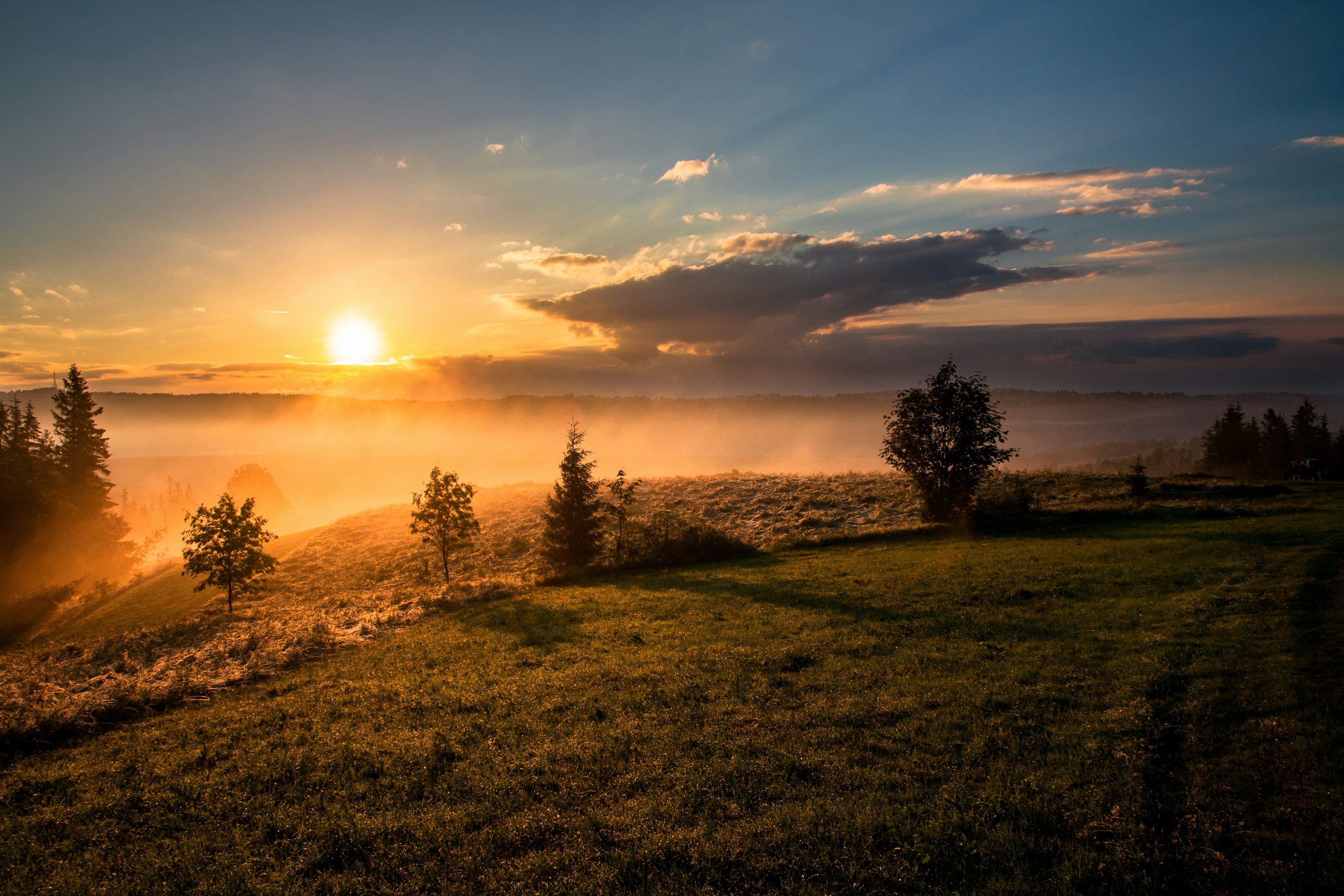
Photo by Tim Foster on Unsplash
“How lovely are Your tabernacles, O Lord of hosts! “Tabernacles, tabernacles, tabernacles . . .” I glanced at the paper in my lap then murmured as I waited for the light to change. “Oh, I see, Lord! Is the psalmist saying that at the points along life’s journey where You let us be aware of Your presence – the places where we stop and worship You and You receive our sacrifices, the tabernacles—are lovely? Just as the Israelites always carried a way—that portable tent—for You to dwell with them, so we always carry about in our heart the way for You to dwell with us? Is that what You mean here, Lord?”
I began meditating-upon-Scriptures-with-the-intent-to-memorize five years ago when God healed my soul of depression. Although far from perfect in this spiritual discipline, I have been consistent. God has never once failed to bless me beyond the ability to tell as I meditate on His Word. Each and every time.
Why? One reason is that when we meditate on His Word, when we consciously turn our thoughts toward Him with gratitude, admiration, respect, and worship, we create a space for Him to be with us. We build a spiritual tabernacle. In my view, this spiritual tabernacle is the central subject of Psalm 84.
OUTLINE: One way to outline this psalm is as follows:
Verses 1 -4 Adoring God and describing the blessedness of His presence – of being in His tabernacle.
Verses 5-7 Thinking of how God’s presence brings strength.
Verses 8-12 Talking with God – Confidently asking for God’s attention, further adoration of God, reminding oneself of God’s goodness and the blessedness of fully trusting God. And, as a consequence, getting so caught up in adoration as to forget to make the request? I think so.

What is a tabernacle? Webster’s 1828 online dictionary (Websters 1828 – Webster’s Dictionary 1828 – Tabernacle) gives several definitions of tabernacle:
- a tent,
- a temporary habitation,
- a place of worship or sacred place, and
- our natural body (see 2 Corinthians 5:1 and 2 Peter 1:3.)
Two more definitions are especially relevant to this exploration of Psalm 84:
- “God’s gracious presence, or the tokens of it” and
- “Among the Jews, a movable building, so contrived as to be taken to pieces with ease and reconstructed, for the convenience of being carried during the wanderings of the Israelites in the wilderness.”
PSALM 84, VERSE BY VERSE: Psalm 84:1-4 – “To the Chief Musician; set to a Philistine lute, or [possibly] a particular Gittite tune. A Psalm of the sons of Korah.
Who were “the sons of Korah?” It is helpful in understanding this psalm to know that the sons of Korah wrote it. These descendants of Korah–who rebelled against God’s authority and was killed for it–were some of King David’s expert warriors. Later descendants of Korah were prominent leaders of orchestral and choral temple worship, well-known for their dedication to serving in God’s house. So, we are hearing the heart of someone with deep passion for God and for being in His presence, a supremely worthy attitude to adopt. Let’s search for the truths God has hidden in this song of ecstatic worship.
1 How lovely are Your tabernacles, O Lord of hosts!
2 My soul yearns, yes, even pines and is homesick for the courts of the Lord; my heart and my flesh cry out and sing for joy to the living God.
3 Yes, the sparrow has found a house, and the swallow a nest for herself, where she may lay her young—even Your altars, O Lord of hosts, my King and my God.
4 Blessed (happy, fortunate, to be envied) are those who dwell in Your house and Your presence; they will be singing Your praises all the day long. Selah [pause, and calmly think of that]!”
Do you see that in the first four verses the psalmist is earnestly, ecstatically praising God as he thinks about the blessedness of being in God’s presence? Look at Verse One.
Verse One: “How lovely are Your tabernacles, O Lord of hosts!” I have been pondering the understanding I received that morning for several weeks now, that idea that we build a spiritual tabernacle when we turn our thoughts consciously to Him. When we praise and adore Him, we make God the most important thing in our lives. We make Him King. Our whole-hearted praise creates a spiritual throne, with God lifted up and us fully submitted to Him, positioned at His feet, the only appropriate way for us to be in His presence. Truly, God is “enthroned on the praises of Israel” (Psalm 22:3b, NLT) and His presence is readily perceived.
That throne, that Divinely-ordained place of meeting with God, is in our hearts, just as the Holy of Holies was in the tabernacle wherein the ancient Israelites worshipped. The Israelites always had available the God-given means, wherever they were, to stop and erect their portable tabernacle. So we always have available the God-given means to stop and build a place to worship Him and to easily perceive His presence – in our hearts.
And here in Verse One, the psalmist is reflecting on how lovely God is in those special places, so lovely that it makes him homesick.
Verse Two: My soul yearns, yes, even pines and is homesick for the courts of the Lord; my heart and my flesh cry out and sing for joy to the living God.
Ever been homesick? Remember when you could think only of cherished faces, smiles, and voices, of familiar sights, sounds, and smells, and the comfort of your accustomed surroundings and activities? The psalmist longs so intensely and persistently for the joys of being with “the living God” that his longing is nearly palpable. And just remembering being in God’s presence makes him sing for joy.
Obviously, the psalmist is one for whom God has become his home. Home is where you live permanently. It is the primary source for all things necessary for life. You leave home to work, see friends, and run errands but each night you eagerly return. Home is where you get physical and emotional sustenance, restorative rest, joy and so much more. It is your primary place for receiving comfort and companionship. Can I truly say the living God is my home? Do I dwell, or live permanently, in His presence? Is He my main source for all things relating to life?
“Whoever dwells in the shelter of the Most High will rest in the shadow of the Almighty. I will say of the Lord, ‘He is my refuge and my fortress, my God, in whom I trust.’ (Psalm 91:1-2, NIV).
Am I like a bird, diligently searching out the most fitting place to live and fulfill the purpose for which God created me?
Verse Three – Yes, the sparrow has found a house, and the swallow a nest for herself, where she may lay her young—even Your altars, O Lord of hosts, my King and my God.
I think God is reminding us here He cares for even the tiniest, apparently least significant of His creatures and that He has provided abundantly for these smallest of creatures to live as close to Him—His very altars—as is possible in this earthly realm. If God does that for birds, how much more will He do that for us?
Birds live and build nests where there is enough food. We can live and make our home in God’s presence because in His presence is abundant spiritual supply.

Besides densely vegetated areas, sparrows roost in man-made structures, as does the most common swallow, the barn swallow. Possibly the psalmist, after reflecting on Israel’s early history, is now thinking of sparrows living in the tabernacle of King David’s time that, unlike the wilderness Tabernacle, was stationary.
Perhaps Jesus had this psalm in mind when He reassured His followers that they were far more valuable than sparrows. As recorded in Matthew 10, Jesus sent out His disciples and gave them authority to minister, “to drive out evil spirits and to heal every disease and sickness” (Matthew 10:1 b, NIV). Jesus reassured them there was no need to fear their enemies, even those who would seek to “kill the body but who could not kill the soul” (Mattthew 10:28). Jesus said:
“Don’t be afraid of those who want to kill your body; they cannot touch your soul. Fear only God, who can destroy both soul and body in hell 29 What is the price of two sparrows—one copper coin? But not a single sparrow can fall to the ground without your Father knowing it. 30 And the very hairs on your head are all numbered. 31 So don’t be afraid; you are more valuable to God than a whole flock of sparrows.” (Matthew 10:28-31, NLT)
Possibly when Jesus sent out His followers on their own, He was thinking of them protectively and affectionately, as a father with a child, wanting them to remember the sparrows living in the Temple which His followers would have seen when they went to worship. Maybe He wanted them to remember—as they encountered the enemy on their own for the first time without Him—that they could always come into His presence in spirit whenever they turned their hearts to Him. He wanted them to be about Kingdom business with joy.
Verse Four: “Blessed (happy, fortunate, to be envied) are those who dwell in Your house and Your presence; they will be singing Your praises all the day long. Selah [pause, and calmly think of that]!”The first four verses of Psalm 84 could be like one paragraph of thought. Starting at Verse One, the psalmist exclaims “Oh, Lord! the places where You meet with us are lovely, so lovely that I am homesick and pining to meet with You again! You love the lowliest of creatures, even the tiniest birds. Anyone who lives with You is so fortunate that they will sing about You all day long!”
Verse Four points out a by-product of being in God’s presence constantly: you will be busy “singing His praises all the day long” (emphasis added). You will be enthusiastically extolling His countless virtues, admiring Him and the things He does—all day long. Will that leave time for doubt or fear or frustration? It is a good idea to selah, to “pause and think calmly about that” as the last word in Verse Four urges us to do.
What thoughts come to your mind as you re-read Verses One through Four and stop to think? Stop now and do that. Give God a chance to speak to your heart.
Part Two will start with the next verse, Verse Five, which, like Verse Four, also begins with the word blessed as the psalmist continues thinking about the benefits of living in God’s presence.

Photo by Sophie Legtenberg on Unsplash
 Photo by Cesar Aldhela on Unsplash


 Photo by Daiga Ellaby on Unsplash

 Photo by Ethel Gr on Unsplash
 Photo by Mark Olsen on Unsplash
 Photo by Daniel Morton on Unsplash


 Photo by Diana Vargas on Unsplash